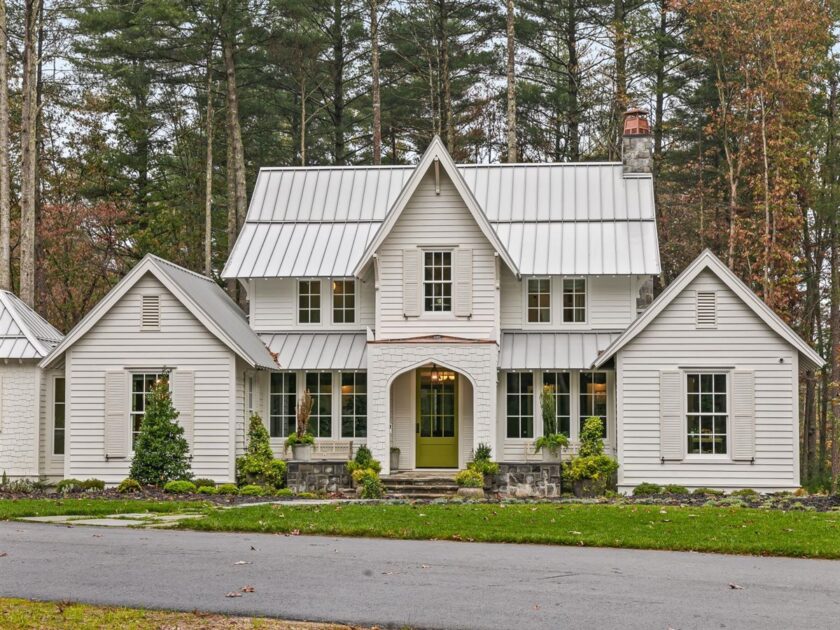
At The Ramble Biltmore Forest, the quiet discipline of care is evident in the architecture, shared spaces, and preserved natural features that weave throughout the community. It shapes how homes are positioned, how amenities are designed, and how open space is protected over time. What emerges is not simply a collection of beautiful homes, but an enduring expression of craftsmanship and stewardship.
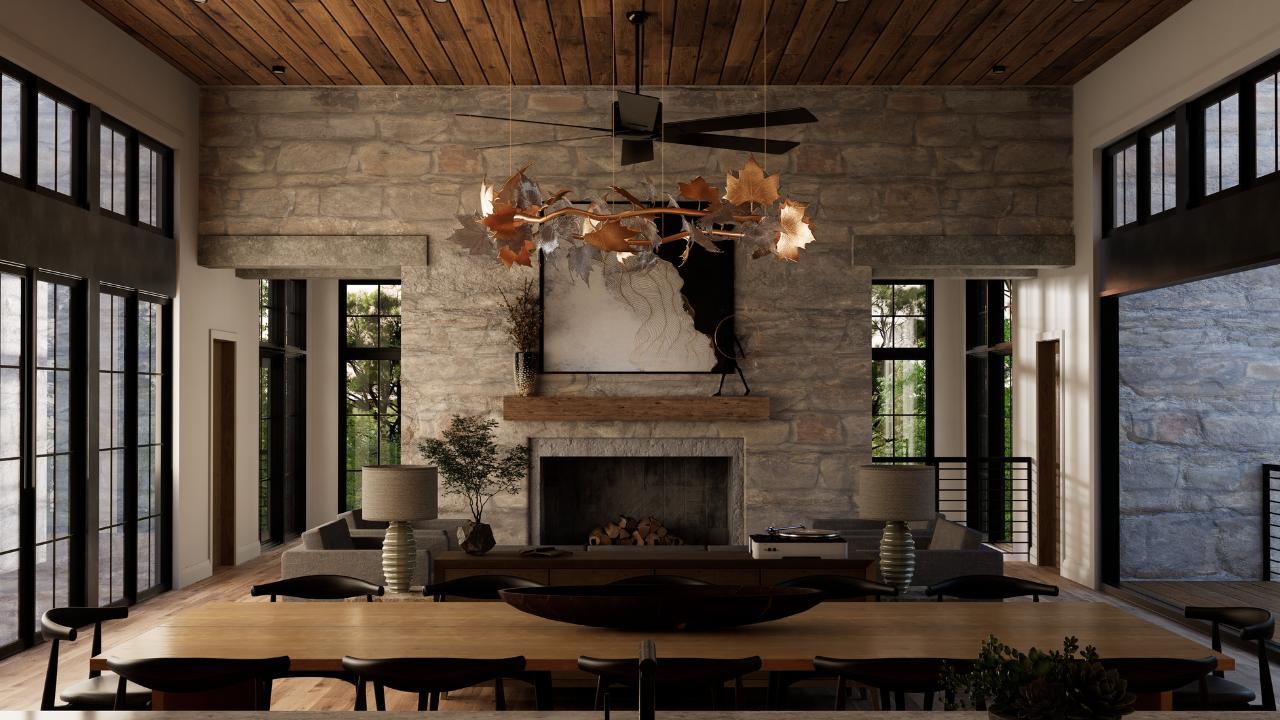
This sense of care finds its clearest articulation in the residences themselves. Homes here are not imposed upon their surroundings; instead, they are shaped by them. This approach reflects a deliberate attentiveness to natural features and an understanding that the land itself deserves consideration.
Windows are positioned to frame distant mountain ranges with intention, capturing light as it shifts throughout the day. Outdoor fireplaces and covered patios extend living spaces into every season, allowing daily life to unfold in rhythm with Western North Carolina’s climate. Decks become natural gathering points, designed not only for expansive views but also for welcoming neighbors and family into shared experience.
Material selections further reinforce this cohesion between architecture and environment. Hand-hewn beams, native stone, copper accents, and generous expanses of glass mirror the textures and tones found just beyond the walls. Landscaping is curated with a similar purpose, ensuring that lawns and gardens feel integrated rather than ornamental. Even the lines of the homes themselves often follow existing topography, allowing structures to complement the terrain instead of reshaping it. This is care expressed through restraint, choosing alignment over alteration.
Such consistency reflects collaboration with some of the region’s most respected custom home builders in Asheville—professionals whose reputations are grounded in longevity and a deep respect for place. Their work within the community reinforces a shared standard: craftsmanship should serve both beauty and durability, creating homes designed to endure for generations.
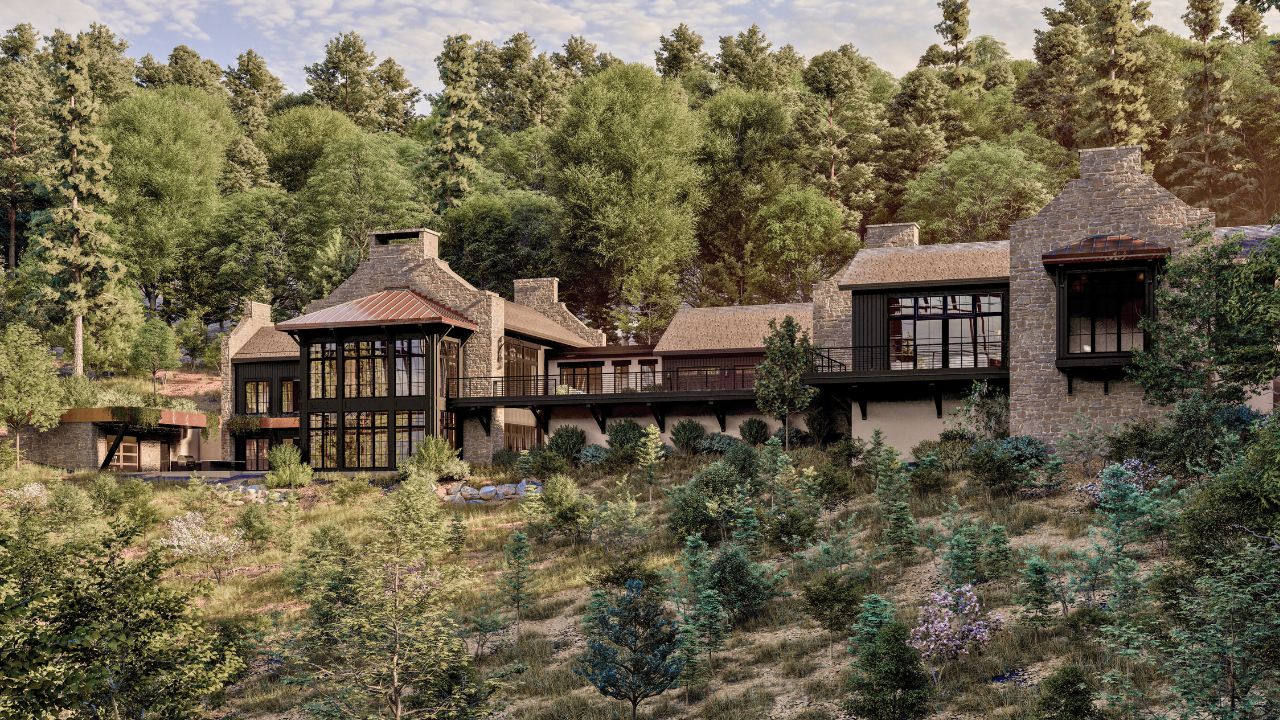
A compelling illustration of this philosophy is the concept home envisioned for Lot 901. The residence reflects a deeply collaborative and site-responsive design process, beginning with careful study of topography, sun orientation, and existing vegetation. As MHK’s Jeremy Driskell explains, those considerations informed a design that conforms naturally to the homesite while maximizing views and accessibility. The project brought together MHK Architecture and Morgan-Keefe Builders, whose shared approach prioritizes both craftsmanship and long-term durability.
The result is a custom legacy residence featuring luxury amenities such as a recreation room, summer kitchen, guest house, and gym annex. Yet the home’s defining feature is a striking 10-foot waterfall spanning its upper and lower levels. More than a dramatic architectural gesture, it serves as an immersive tribute to the mountain landscape of Western North Carolina, establishing the structure within its setting. Explore Lot 901 and other exclusive homesites here, and learn how you can build your own story in The Ramble.
While individual homes embody careful consideration at a personal scale, the same discipline extends into the community’s shared spaces. Here, care is visible in how gathering is encouraged, how wellness is supported, and how history is preserved.
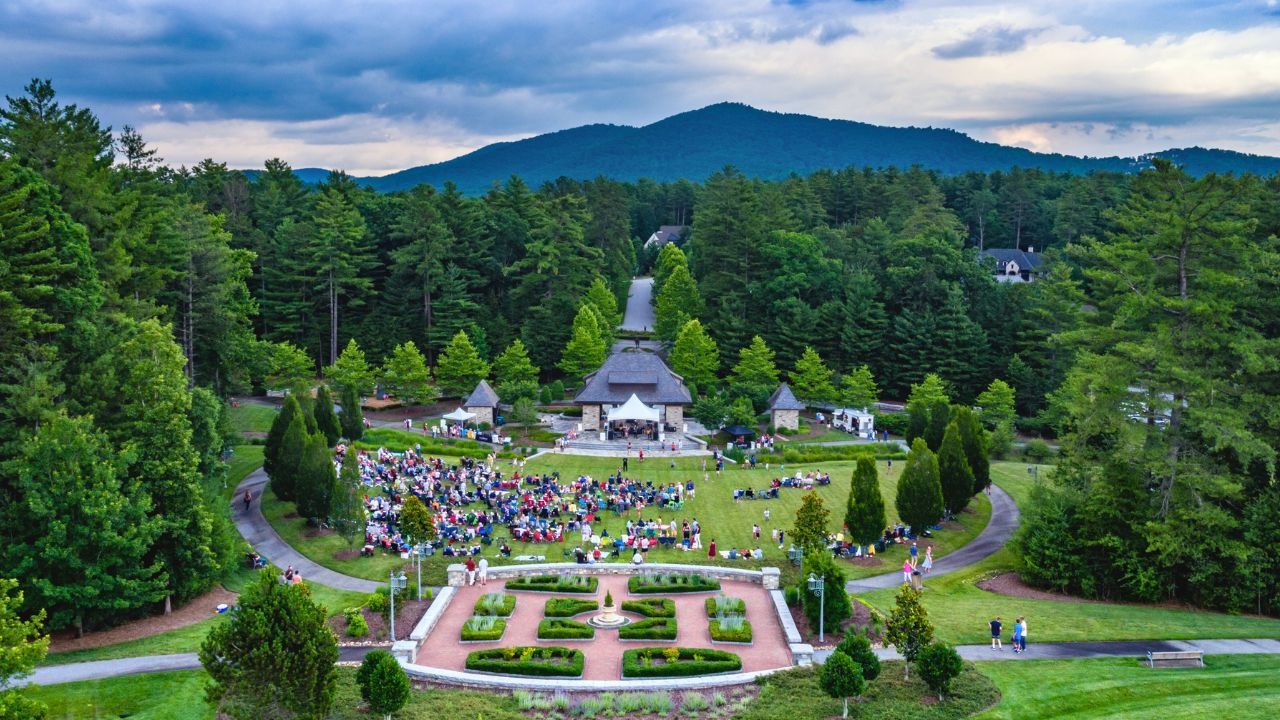
Longmeadow Park, inspired by Olmsted’s tradition of grand public greens, serves as both a geographic and social heart for The Ramble. Its open lawn, natural amphitheater, and pavilion host concerts and seasonal gatherings, offering residents a place where everyday moments and special occasions unfold against a backdrop of forest and sky.
Nearby, the Living Well Center was created with equal intentionality. A heated saline pool, fitness spaces, pickleball courts, and a welcoming great room create an environment that encourages residents to prioritize care for oneself. The design reflects an understanding that vibrant communities are sustained not only by architecture, but by opportunities for connection.
History, too, has been preserved and thoughtfully integrated. Buck Spring Cabin, once part of George Vanderbilt’s Buck Spring Lodge built in 1896, was carefully relocated and now functions as a gathering place for book clubs, card games, and resident events. By bringing this structure into daily life, the community demonstrates attentiveness not only to what is being built, but to what has come before.
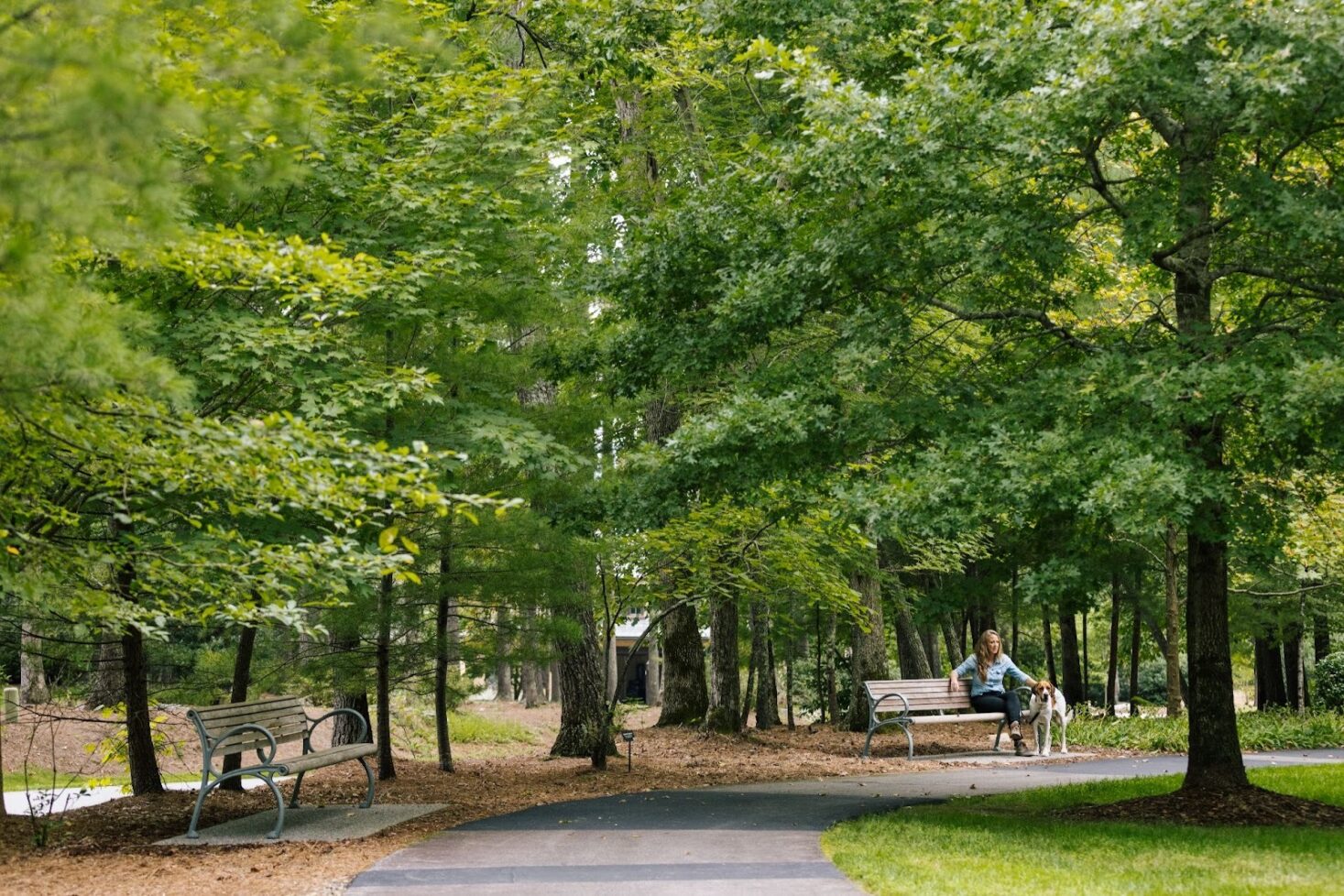
Threaded throughout these amenities is the preserved forest that characterizes the neighborhood. Expansive views from elevated points such as Ducker Mountain reveal the Blue Ridge Mountains at their full scale, while more than five miles of wooded trails connect neighborhoods, parks, and gathering spaces. The placement of each trail reflects long-term intentionality, reinforcing privacy, walkability, and a sustained connection to nature.
Overlook Park, with its charming bridge and gentle waterfall, offers a place to pause and reflect. Protected open spaces and intact wildlife corridors illustrate a sustained commitment to preservation. Consistent maintenance ensures that these environments remain as thoughtfully tended years from now as they are today. Here, continuity becomes the measure of care, expressed in what remains intact across generations.
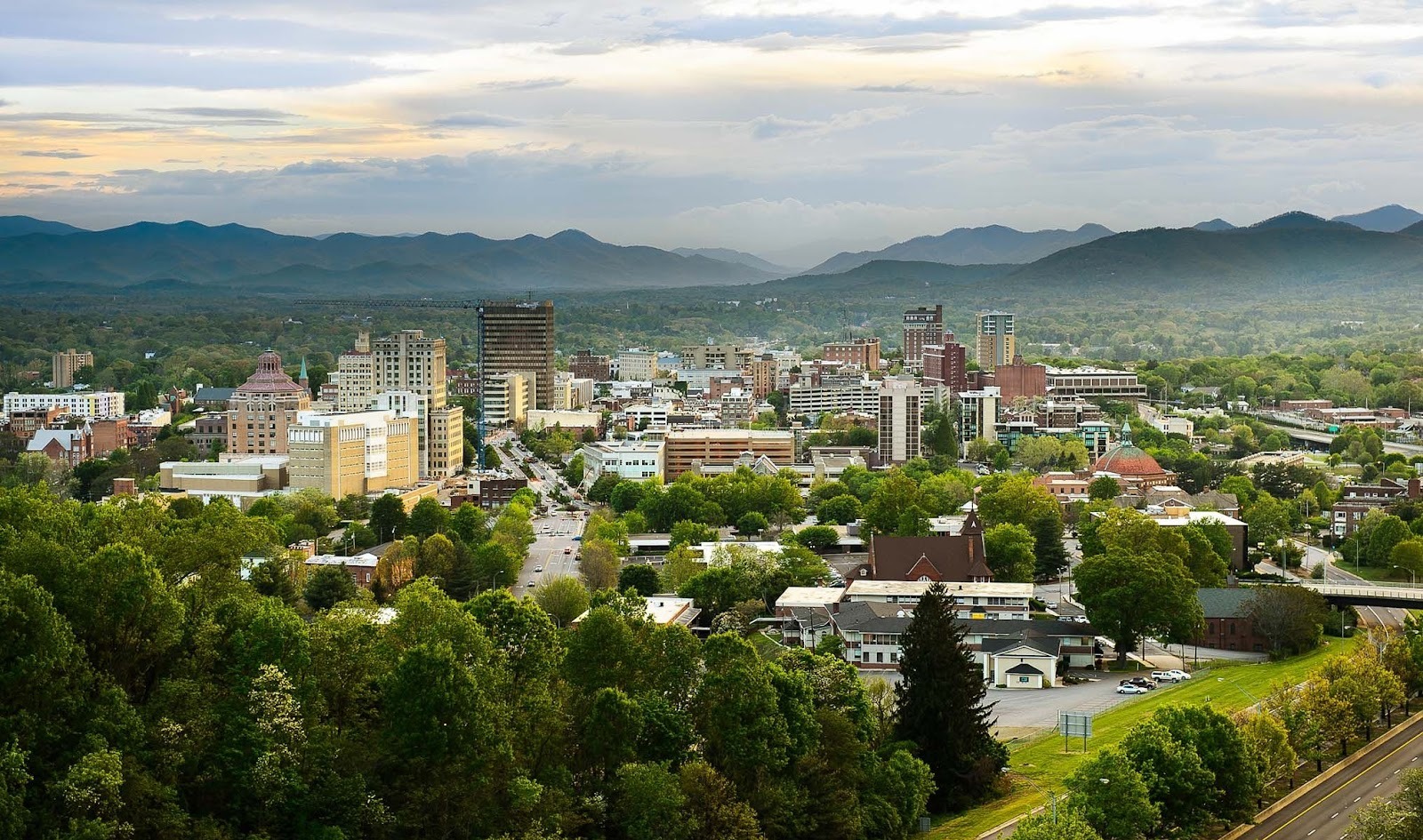
Beyond its physical design, this spirit of stewardship extends into the greater Asheville region. The Ramble Charitable Fund, initially established by Biltmore Farms, directs a portion of lot sale proceeds into an endowment supporting education, economic development, health care, arts and culture, and environmental initiatives. From its earliest stages of development, the community was structured with care for the region in mind.
Residents further deepen these ties through the External Relations Committee, which cultivates partnerships with local nonprofit organizations and fosters meaningful engagement beyond the community’s boundaries. In this way, stewardship is not confined to architecture or amenities; it becomes a shared responsibility carried outward.
Taken together, these elements form a cohesive story of care, one in which architecture responds to topography, amenities invite connection with intention, forests are preserved with foresight, and philanthropy is structured to endure. At The Ramble Biltmore Forest, care is not a single feature but a guiding principle, expressed through craftsmanship, sustained through stewardship, and designed to serve generations to come.
Become part of this living story of care, where craftsmanship, stewardship, and thoughtful design continue to shape each day at The Ramble Biltmore Forest.